


“Ideas are like fish. If you want to catch little fish, you can stay in the shallow water. But if you want to catch the big fish, you’ve got to go deeper.
Down deep, the fish are more powerful and more pure. They’re huge and abstract. And they’re very beautiful.” - David Lynch
The world lost a visionary filmmaker in David Lynch, who passed away on January 15. He opened my heart and mind to the possibilities of cinema… To how it can go beyond the ordinary and obvious, into the soul.
One of my favorite films of the year, The Brutalist, does precisely that - but before we dive in, let’s plan our next Movie Club event, where we’ll celebrate Lynch’s legacy together.
🎟️ Our next Movie Club event - LIVE!
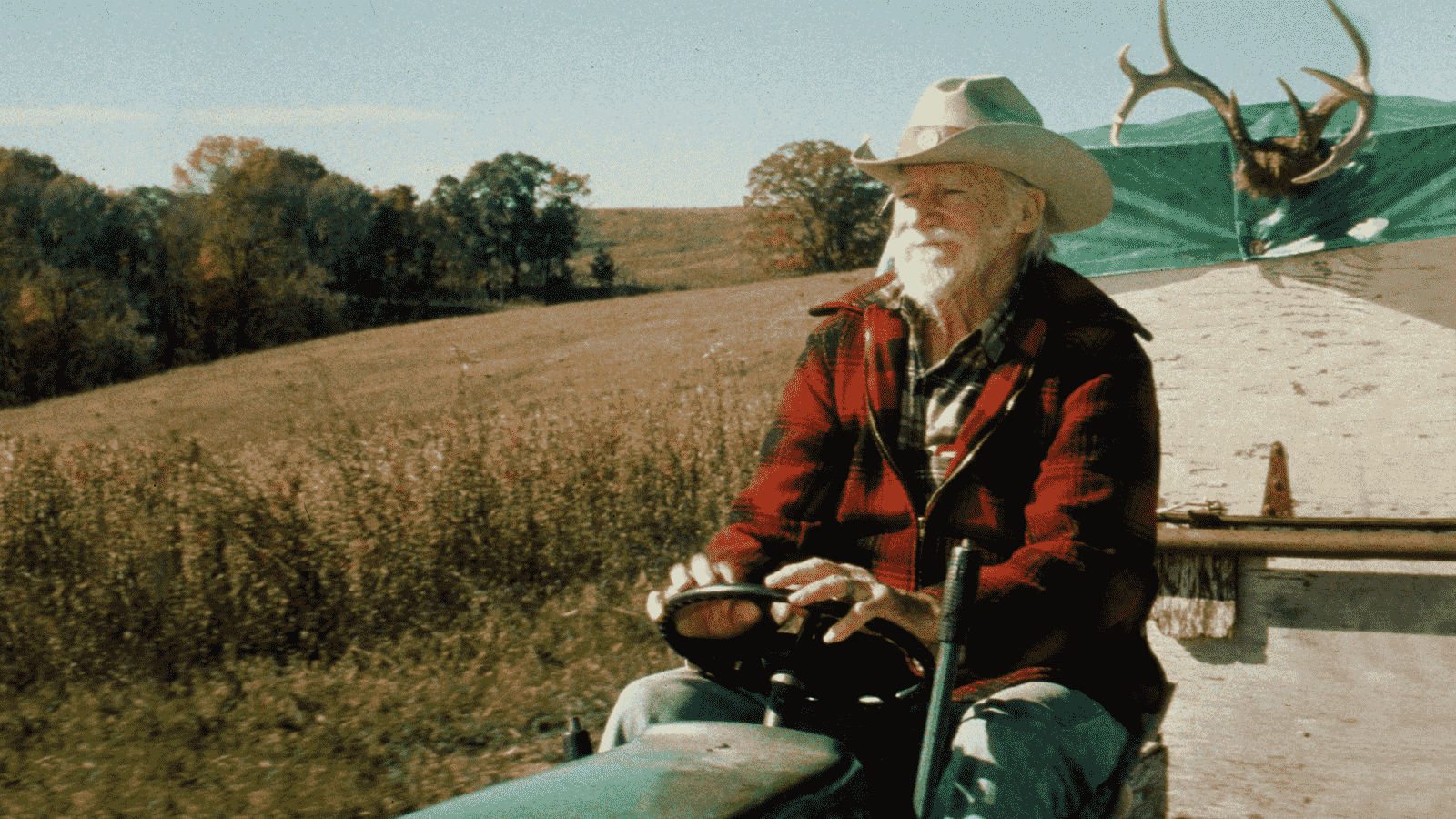
Our second “watch party” here at The Lighthouse will feature The Straight Story.
At first glance, it’s an oddly straightforward film for Lynch, considering his reputation as a provocateur and surrealist. But for a time, he felt it was his most experimental.
The Straight Story follows an older man who embarks on a long journey atop a riding lawnmower. It’s a simple, heartfelt, G-rated Disney movie - no, seriously, I’m not kidding! - that’s inspired by true events and bursting with compassion. I’m keen to explore how The Straight Story both diverges from and fits into Lynch’s canon.
This will be my first time watching The Straight Story, so we’ll be breaking it down together! Like in our Interstellar screening a few weeks back, we’ll hang out, network, trade stories, and discuss the film’s art and craft in real-time.
Join us for lively discussion and camaraderie with kindred spirits, whether we wind up with an intimate gathering or a full house!
This event is exclusively for paid subscribers. If you’ve already upgraded, then you’re all set - simply follow the instructions here at the appointed time below.
(Please note that you’ll need your own copy of the film if you want to watch along with us, but you’re welcome to tune in regardless).
WHEN: Saturday, February 08, starting at 10:30am EST. We’ll catch up for half an hour, then begin watching together promptly at 11:00am EST.
WHAT: A virtual “watch party” of David Lynch’s THE STRAIGHT STORY.

OVERTURE: In search of the Big Fish
Oscar Season is in full swing, friends!
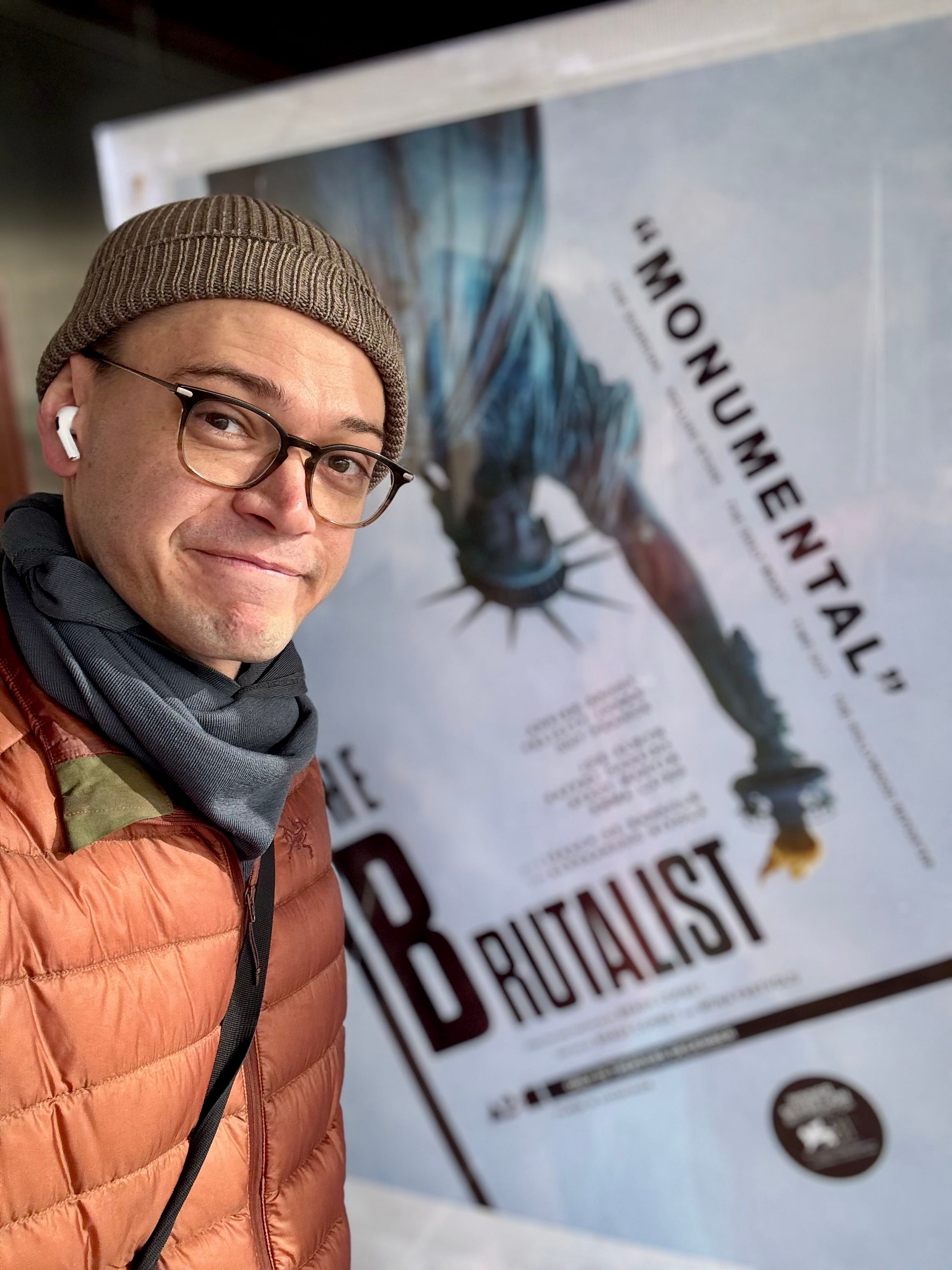
Although Emilia Pérez leads the pack with 13 nominations, the true star for me is director Brady Corbet’s The Brutalist. It’s a titan of a film that proudly and unapologetically goes after “the big fish”, to borrow Lynch’s terminology.
For that, it’s been honored with 10 nominations.
I was lucky enough to catch a 70mm projection of The Brutalist at The American Film Institute’s flagship cinema in Washington, DC - twice!
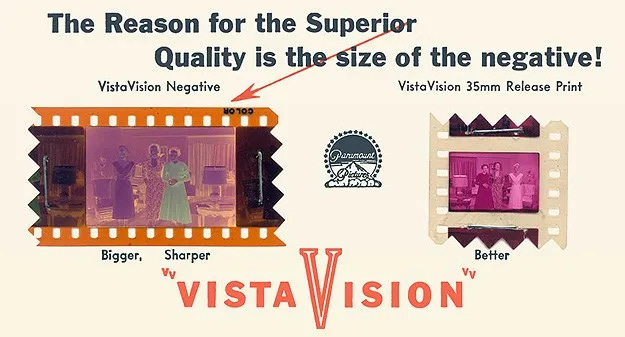
In making The Brutalist, Corbet resurrected a near-extinct widescreen format called VistaVision. It was introduced by Paramount Pictures in 1954 and used to capture some of Alfred Hitchcock’s greatest films, including Vertigo and North by Northwest.
The larger negative is eight-perf, effectively doubling the size of a traditional 35mm frame. This unique perspective enabled Corbet and his cinematographer, Lol Crawley, to capture the film’s expansive architecture without wide-angle lenses.
“The best way to photograph architecture is with rectilinear lenses that don’t distort the buildings themselves,” Crawley explains:
You can also shoot the most beautiful portraits on the format. Essentially, you’re encompassing two different things: You have the shallower depth of field of a longer lens, but also the field of view of a wider lens.
It’s a bold choice for a bold film, whose ambition among this year’s Best Picture nominees is rivaled only by Dune: Part Two, a blockbuster with the soul of an arthouse film. I had the privilege of seeing Dune four times on the big screen and expect to revisit it soon, but for now, let’s bring The Brutalist into focus.
We have a lot of ground to cover together as we take stock of the craft; go behind-the-scenes of how Corbet’s film was independently financed (and what the implications may be for the indie filmmakers among us); and explore why humans even bother creating art in the first place. So make yourself a cup of coffee, or tea, or whatever beverage is most suited to the time, and let’s get going!*

*Please note: This post was originally for paid subscribers only, but I’ve since unlocked it for everyone as The Lighthouse continues to evolve. My thought is to make all of my writing accessible to the entire community while offering deeper engagement and exclusive experiences for paid subscribers.
You can learn more about the different subscription tiers available HERE and discover how to join our exclusive Chats, Movie Club events, and more.
Enjoy the read! If this post resonates with you, consider becoming a paid subscriber to support The Lighthouse and connect more deeply with our growing community:

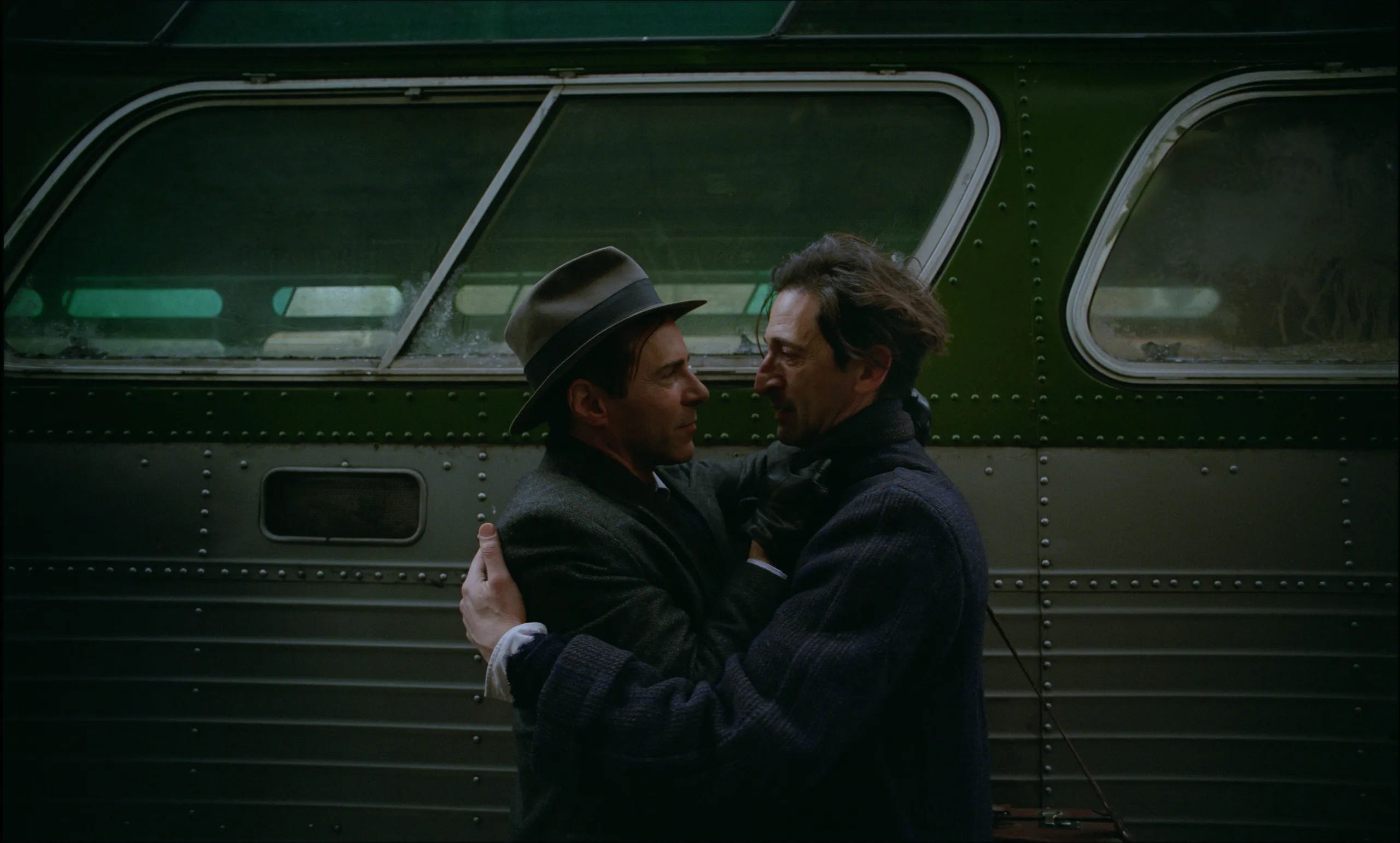
ACT ONE: Setting the stage for an epic story
Corbet’s film has been described as “monumental”, but the word doesn’t feel epic enough. We’re talking about a sweeping historical drama that spans decades and runs almost four hours long. It’s structured as an Overture, Act One, Intermission, Act Two, and Epilogue. I can’t remember the last time I attended a screening with a proper intermission that’s actually baked into the running time. It put a big smile on my face.
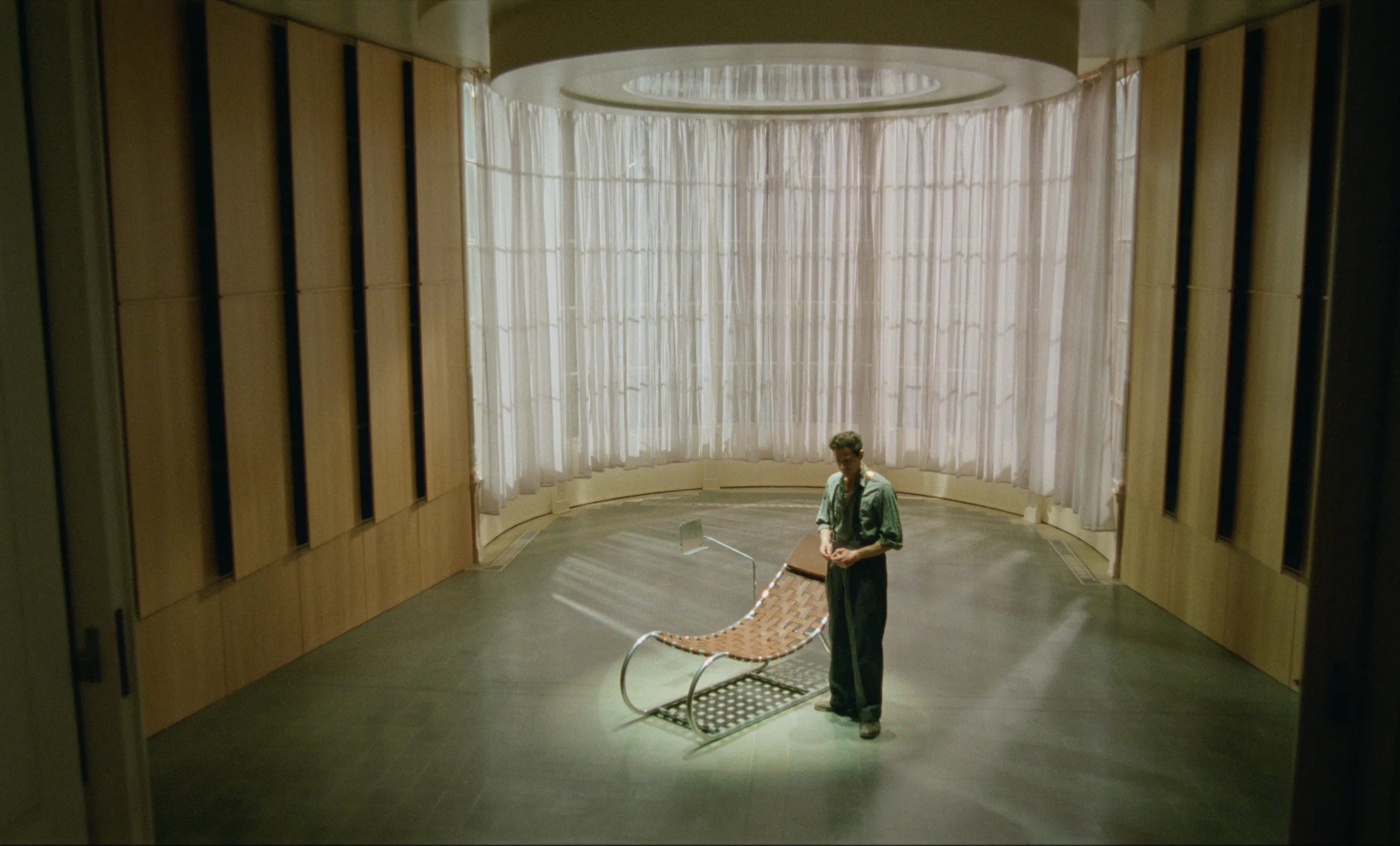
The Brutalist grew out of a desire to explore the relationship between postwar trauma and postwar architecture. It follows the life of László Toth, a (fictional) architect from Hungary and Holocaust survivor. After World War II, László emigrates to America for a fresh start, in search of freedom, safety, and professional opportunity.
In other words, in search of the American Dream.
The film foreshadows a subversion of the American Dream right from the start.
László awakens in the dark, disoriented. He stumbles through a crowd, out of the underbelly of a ship and up into the light of day. He laughs, elated by the sight of the Statue of Liberty for the first time - except it looms upside-down in the frame.
One of the opening shots visually skews the symbol of America.
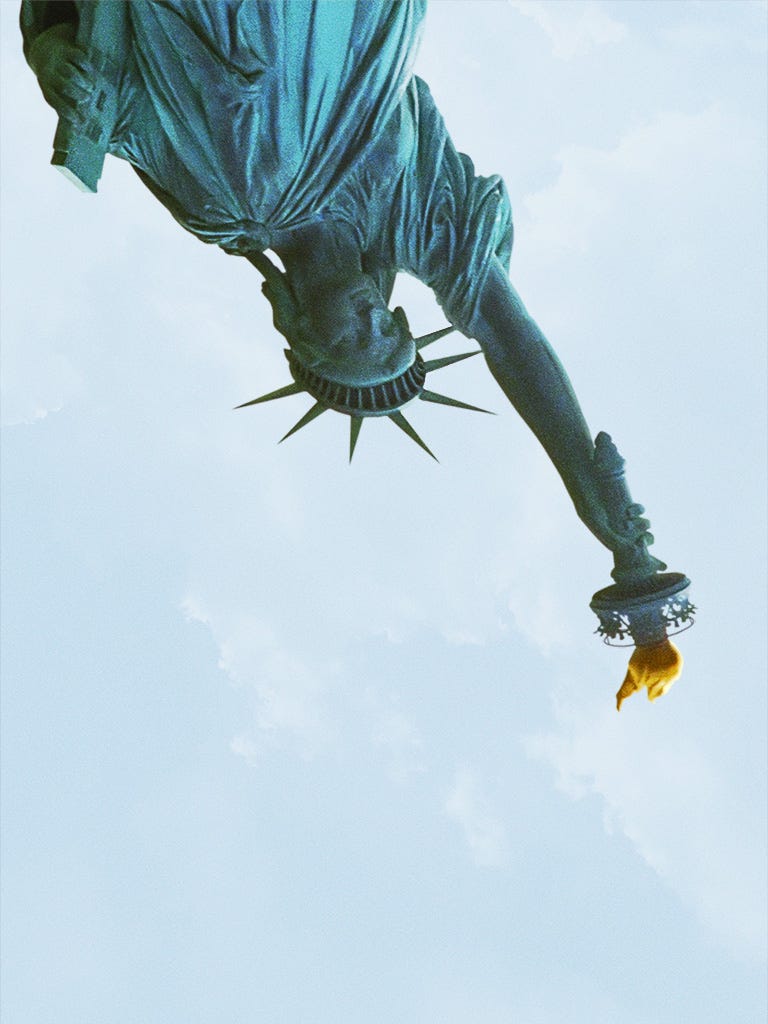
In that moment, I knew I was witnessing a film that marries style with substance. It further telegraphs its message with an ominous Goethe quote, in voiceover:
“None are more hopelessly enslaved than those who falsely believe they are free.”
Throughout Act One, László - played with great empathy by Adrien Brody - struggles to find his footing in a new country. He faces persecution, poverty, and drug addiction. Eventually, he helps his cousin renovate the library of a wealthy industrialist, Harrison Lee van Buren, played by Guy Pearce.
Impressed, Harrison commissions László to build a visionary cultural center in Pennsylvania. It could be the ideal intersection of László’s talents, interests, and needs… Decent pay, a place to stay, and even a way for his wife and niece, Erzsébet and Zsofia, to join him in America, leaving the traumas of war behind.
Freedom!
But at what cost?
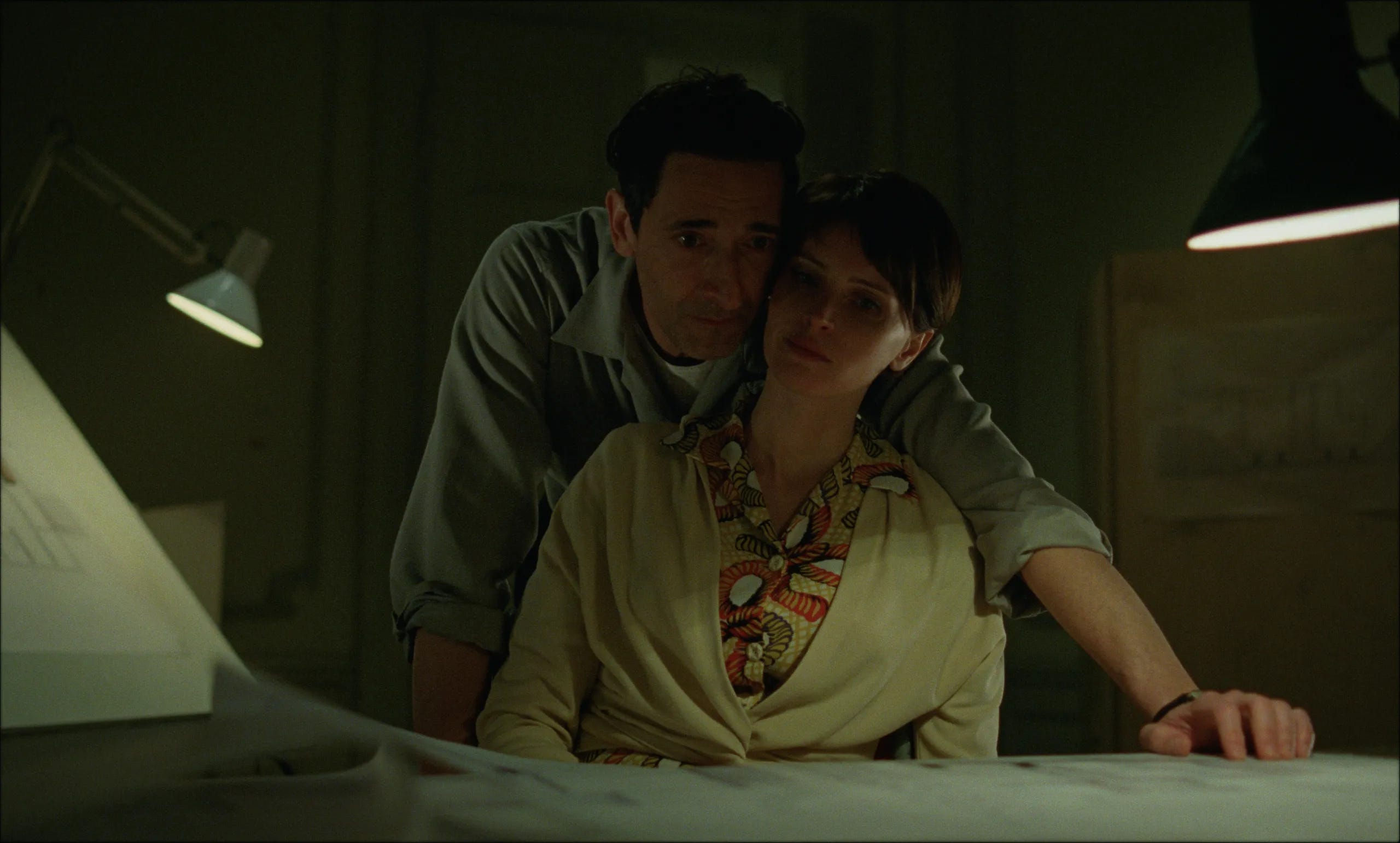

INTERMISSION: What good art is supposed to do
“One of the many things that makes Brady Corbet’s The Brutalist so essential,” film critic Brian Tallerico writes, “is how it defies easy categorization”:
It is “about” so many things without specifically hammering, highlighting, or bullet-pointing them… It’s a story of immigration, addiction, Zionism, architecture, inequity, class, violence, and even filmmaking… It’s a film that turns inward into itself, winding its themes around its characters like a great American novel.
Which means there’s much with which to connect, big and small.
In one scene, László shaves while practicing his English pronunciation. I lived that moment myself in The Netherlands, practicing my Dutch in front of the mirror with shaving cream all over my face, struggling to prepare for the language exams.
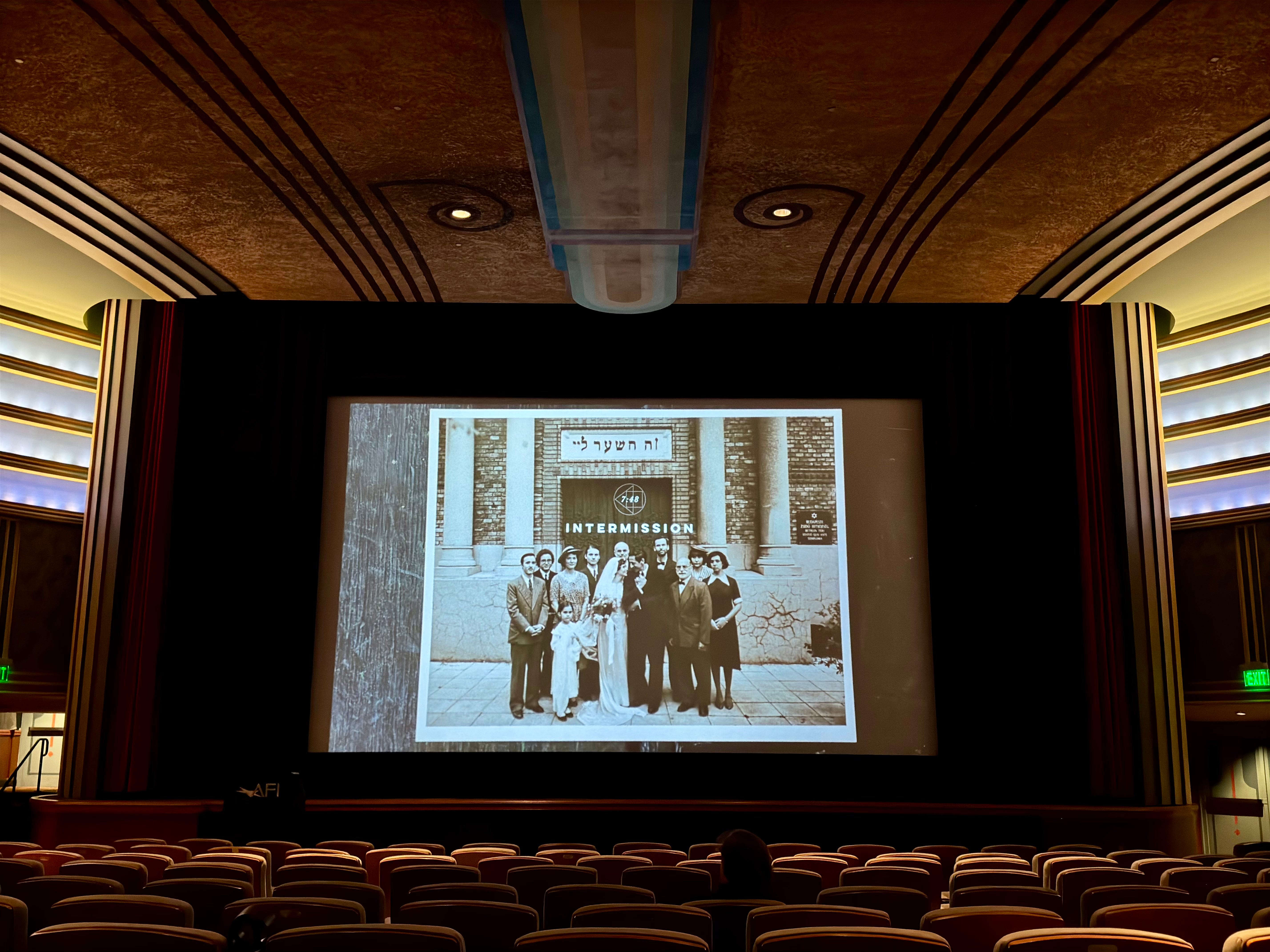
During intermission, I bumped into a Brazilian man who was keen to discuss the film. “I had no idea what this movie was about,” he said. “I just heard it was showing in 70mm, so I had to come.” His eyes flashed excitedly. He shared his background as a classically trained conductor who immigrated to the US five years ago.
He told me about the odd jobs he took - completely unrelated to his field - so that he could make ends meet, seeing in László a version of his own story.
In Corbet’s words, “like all public art, it means different things to different people… It is there to provoke discussion. It is there to provoke new ideas and to unpack old ones. That is, historically, what good art is supposed to do.”

ACT TWO: The unholy alliance of Art & Commerce
The film slowly reveals the toll that Harrison’s patronage takes on László, who “fled fascism only to encounter capitalism”. This is the idea I want to spend some time unpacking here. Many of us are filmmakers and creatives, so it’s especially relevant.
At the heart of The Brutalist lies a tug-of-war between art and commerce.
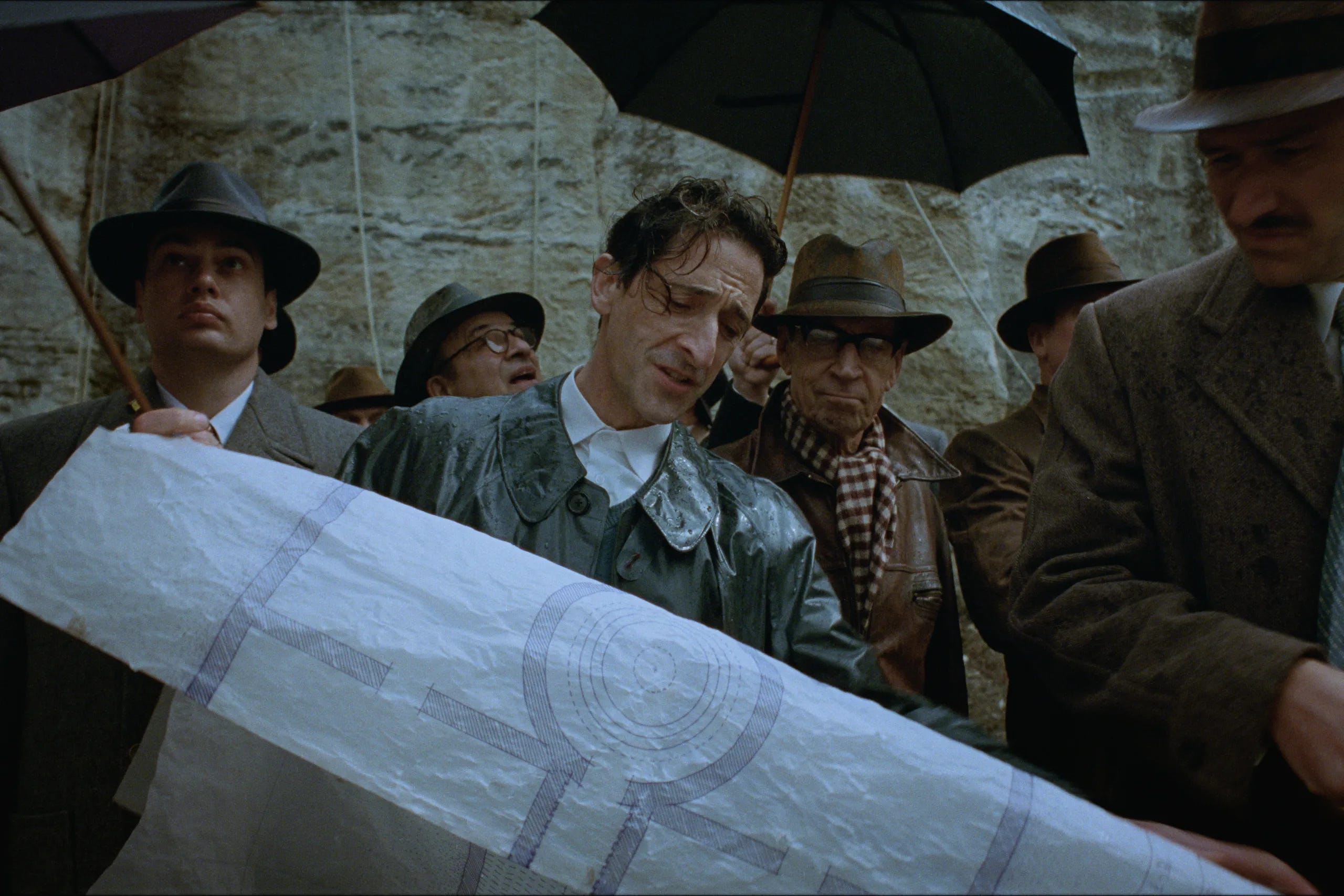
Heck, it’s a tension that’s baked into the making of the film! Corbet and his team spent SEVEN YEARS independently producing The Brutalist for only $10 million:
What they really need to be teaching kids in film school is building a budget and raising money for your project. And there are a few ways to do that. If you’re fortunate enough to have an international passport, whether the UK or France or anywhere in Europe, many programs are in place for raising soft money. I’m American, so unfortunately - because we have no cultural minister and don’t really have any meaningful support for the arts - I have to do it the Hollywood way.
Which is interesting, because these films really have one foot in the Hollywood tradition and one foot very much outside of it.
I realized that to make films for even over $1 million, I needed to go through the process of having the project sent to various performers… The best way to raise money is to build a package. I’m not saying that someone needs to attach Tom Cruise. Maybe there’s a young performer that had a big year and financiers might be more inclined to invest in a project that they’re attached to.
You just build the project brick by brick, and you have to anticipate a lot of rejection… If you feel confident about your material and you’re not just selling yourself on the delusion, then things tend to work out.
…You want to write material that attracts everybody. But for me, so much of this is very intuitive. I’m not that strategic. I don’t write something or make something as a means to an end. Ever. It never occurred to me that the project wasn’t commercial. Because in Hollywood, nothing is ever commercially viable enough.
…The truth is that Hollywood just usually waits for everyone else to tell them what to think. It was only when the film started getting a reaction... that it was perceived as being potentially commercially viable.
To overcome the challenges that Corbet & Co. encountered along the way, they had to get creative. For example, when insurance companies refused to insure the production because their original screenplay was too long, they shrunk the margins to make it fewer pages. And when they were in Hungary, a landlocked country, they considered shooting the opening aboard the ship in a parking garage.
They knew their project inside and out, so they knew what could work.
“My thing is: Give me a number, but let me move the sand around in the box,” Corbet explains. “I will deliver on that number, but don’t tell me how to make my fucking movie, period.” In the end, The Brutalist was shot in a mere 33 days.

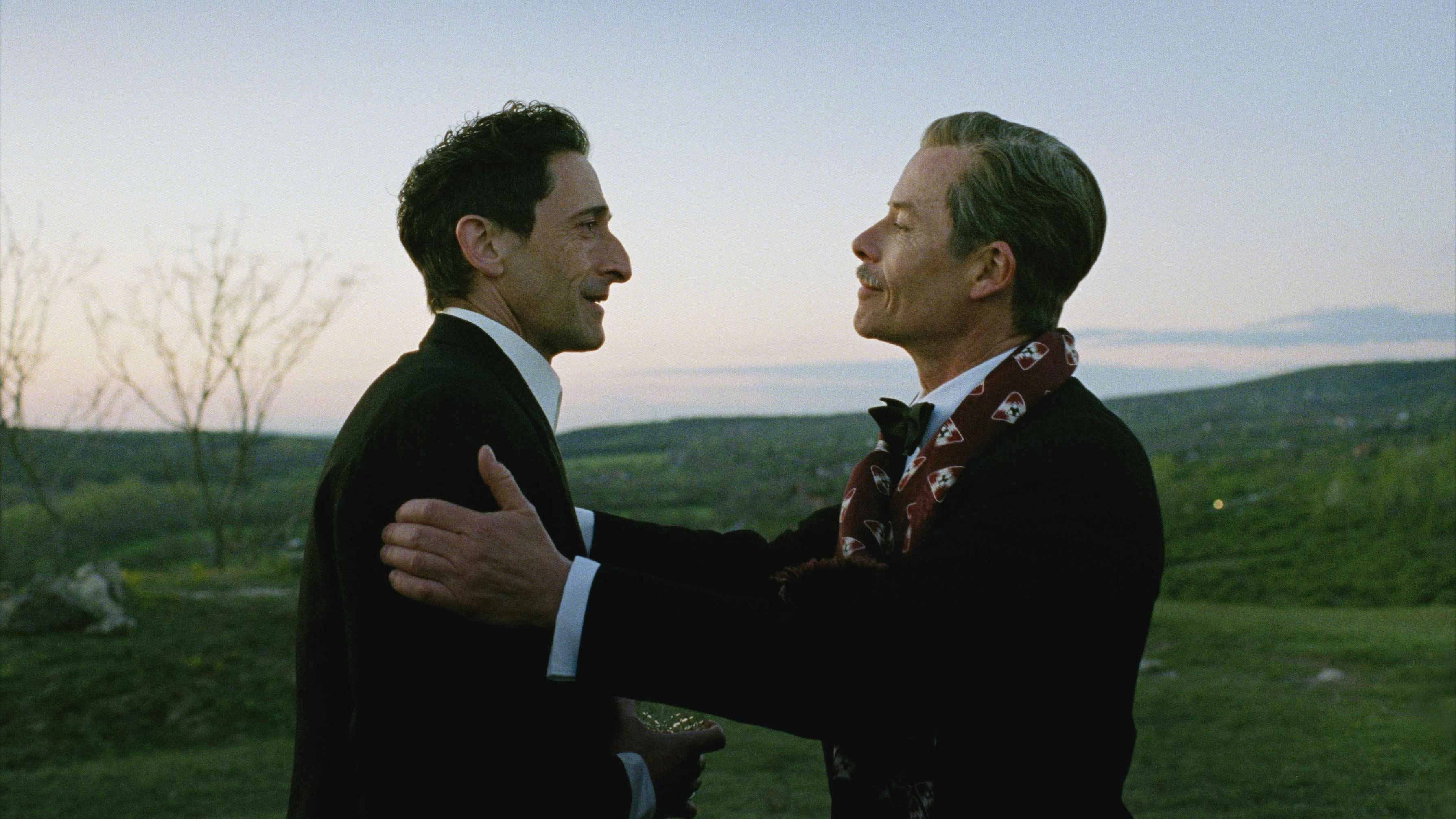
[Spoiler alert] As the film tips into its second act, Harrison shows his true colors.
He has money but no soul - so he tries to take László’s.
Here, I’m reminded of Judge Holden from Cormac McCarthy’s Blood Meridian, one of my favorite books. “The freedom of birds is an insult to me,” Holden says at one point. “Whatever in creation exists without my knowledge exists without my consent.”
Harrison, like Holden, craves control. Nature, creativity, beauty are affronts to his impoverished worldview. So Harrison effectively strands László on his isolated estate… In an especially painful scene, he throws money at László, then asks him to give it back… And in a horrific moment deep in the mines of Carrara, Italy, he violates him unimaginably. “My poor husband,” Erzsébet remarks after witnessing László’s increasingly erratic behavior. “God has been robbed of you.”

Through one lens, it’s an extreme illustration of how broken the art/commerce relationship can be. Its dysfunctions are thrown into especially sharp relief by collaborative mediums like the movies. In the words of legendary filmmaker Andrei Tarkovsky, “Cinema is unhappy… because it depends on money.”
I’ve experienced this firsthand in my own projects.
Screenwriters are often expected to work “on spec”, for free, harder than the competition. It’s a race to the bottom, and refusing to play the game is “amateur”. If-Come deals are on the rise in Hollywood, so the problem seems to be getting worse.
And it’s not just the screenwriters who struggle. Sometimes, it’s the whole team. A script of mine is currently with a production company - championed by their producers, development team, and a fearless director - and nobody’s getting paid.
That’s par for the course.
“Filmmakers frequently - and independent filmmakers, especially - make either very little money, or often $0,” Corbet himself confirms. “What that means, because no one can live on $0, is that you have to take on other jobs”:
I mean, I haven’t had a day off in many, many, many, many, many years. I do not remember the last time that I didn’t have something in the diary, and that’s exhausting physically and spiritually, especially when you do a job where you need energy and sleep to be able to focus and do your job well. It spreads people out too thin, and it’s just simply not sustainable.
I always find it interesting that there are so many people that reap the benefits of the projects that we conceive of and realize, and there’s something very odd about that imbalance… There’s real presumption from the public… that artists are doing a lot better than they’re actually doing.
I know many people that are currently campaigning for Best Picture for their movies, and they’re still struggling to pay their rent.
Obviously, it shouldn’t be this way. But here we are.
So what to do?
Honestly, I don’t know. I don’t have a solution to propose.
“I would have quit a long time ago if I could see myself doing literally anything else,” I once shared with a fellow filmmaker. He felt exactly the same way.

In my experience, there’s an obsessive quality to most acts of creation… An irrational but wholly irresistible urge to make sense of the world.
“That thrumming ‘I exist’ inside demands an outlet,” says film critic Stephen David Miller. “However hopeless things appear, the human spirit always seems compelled to make a mark. So we channel our zeal and our abilities, whatever we can muster, and we do our best to etch them into stone.”
Case in point, László sacrifices everything to the construction of his monolithic cultural center in Pennsylvania.
It’s the only way he knows how to express himself after staring down the traumas of first fascism, then capitalism. He goes so far as to invest his own fee back into the project, pouring all of himself into his creative vision - much like Corbet poured himself into the making of The Brutalist.
Art imitates life imitates art.
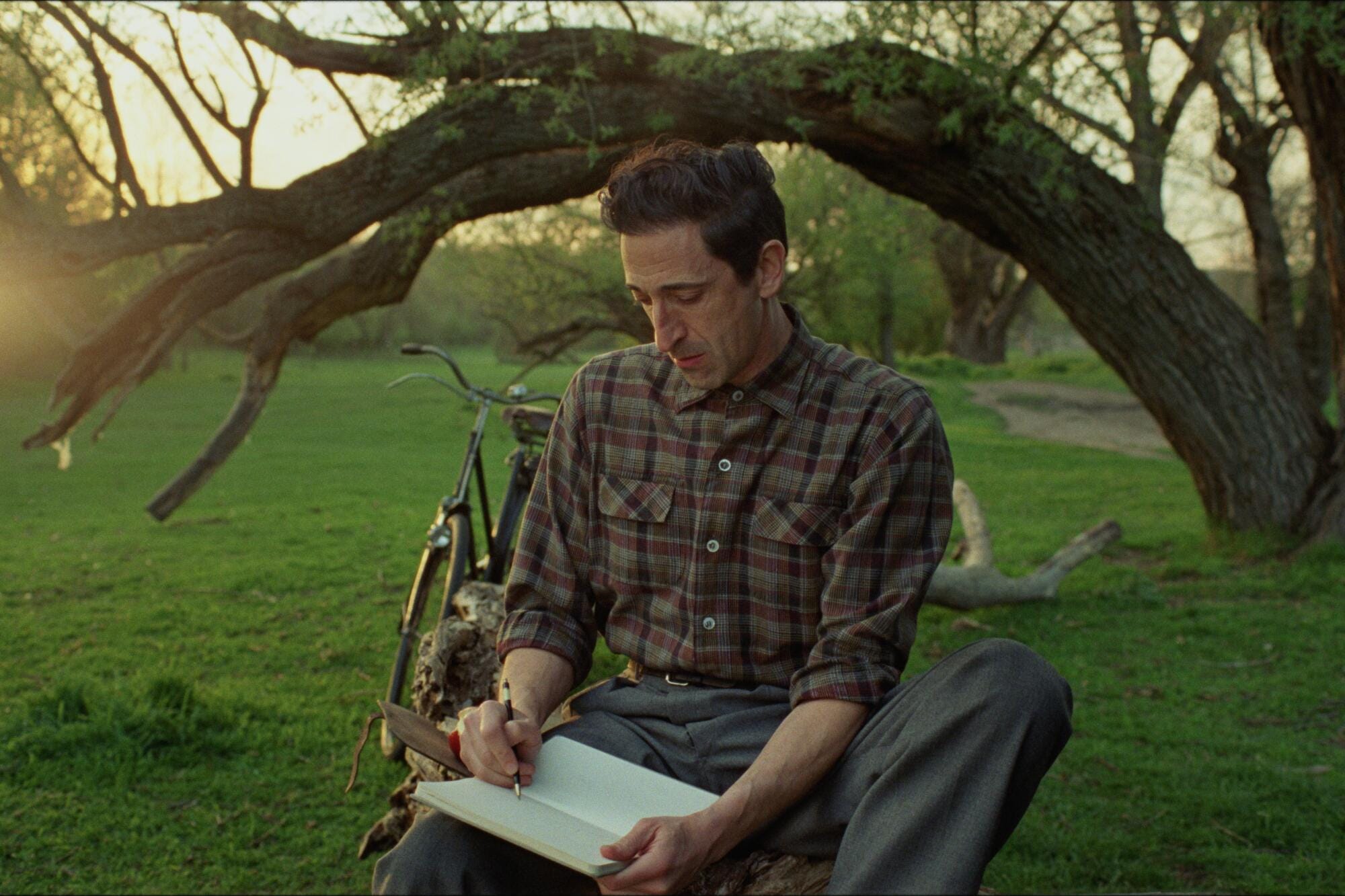

EPILOGUE: That which endures
In a telling scene, Harrison asks László why he became an architect.
“Is there a better description of a cube than that of its construction?”, László replies.
In other words, the work is the answer. It speaks for itself. “Of course, I feel the same way about my films,” Corbet shares. “If you could tell a film, then why make a film?”
Architecture, cinema, both are mediums that have the power to express the inexpressible. They are their own languages, spoken into existence through singular vision, sheer force of will, and a collaborative effort against the odds.
And in their purest form, they often come at great personal cost.
Perhaps, as László’s niece puts it, “It is the destination, not the journey.”
It is the final outcome of one’s work - not the trials and tribulations informing and shaping the process - that has the last word.
After all, the outcome is what endures the erosion of time:
Studying at Bauhaus, László learned that design must serve its purpose... No frivolities, no flourishes, form as a perfect expression of function.
Both László’s buildings and Corbet’s filmmaking reflect such functionalist ideals. So, for example, the relentless rhythm of the music - when paired with the visual motif of the road rushing forward - suggests the relentless march of industry, of creativity.
No superfluous parts.
Even The Brutalist itself becomes a brutalist object.
It’s “a physically heavy object when it screens the way it’s meant to be seen, on 70mm,” recalls Corbet. “It notoriously weighs hundreds of pounds”:
It was really funny, because I remember getting the Pelican cases for the first time with all 26 reels inside of them. And I was like, “This feels right”…
I remember I always felt so bad, in a way, when I was making the film. It was an imposition for everyone. And now, physically, it requires several people to carry it around. It is a big object, but that is also the beauty of the project, and I think that’s what attracted people to it. It’s both.
It’s a pain in the ass, but it’s also a beautiful object.
These projects, that’s just what they are. It’s a lot more agony than ecstasy, but the ecstasies are what keep us all coming back, I suppose.

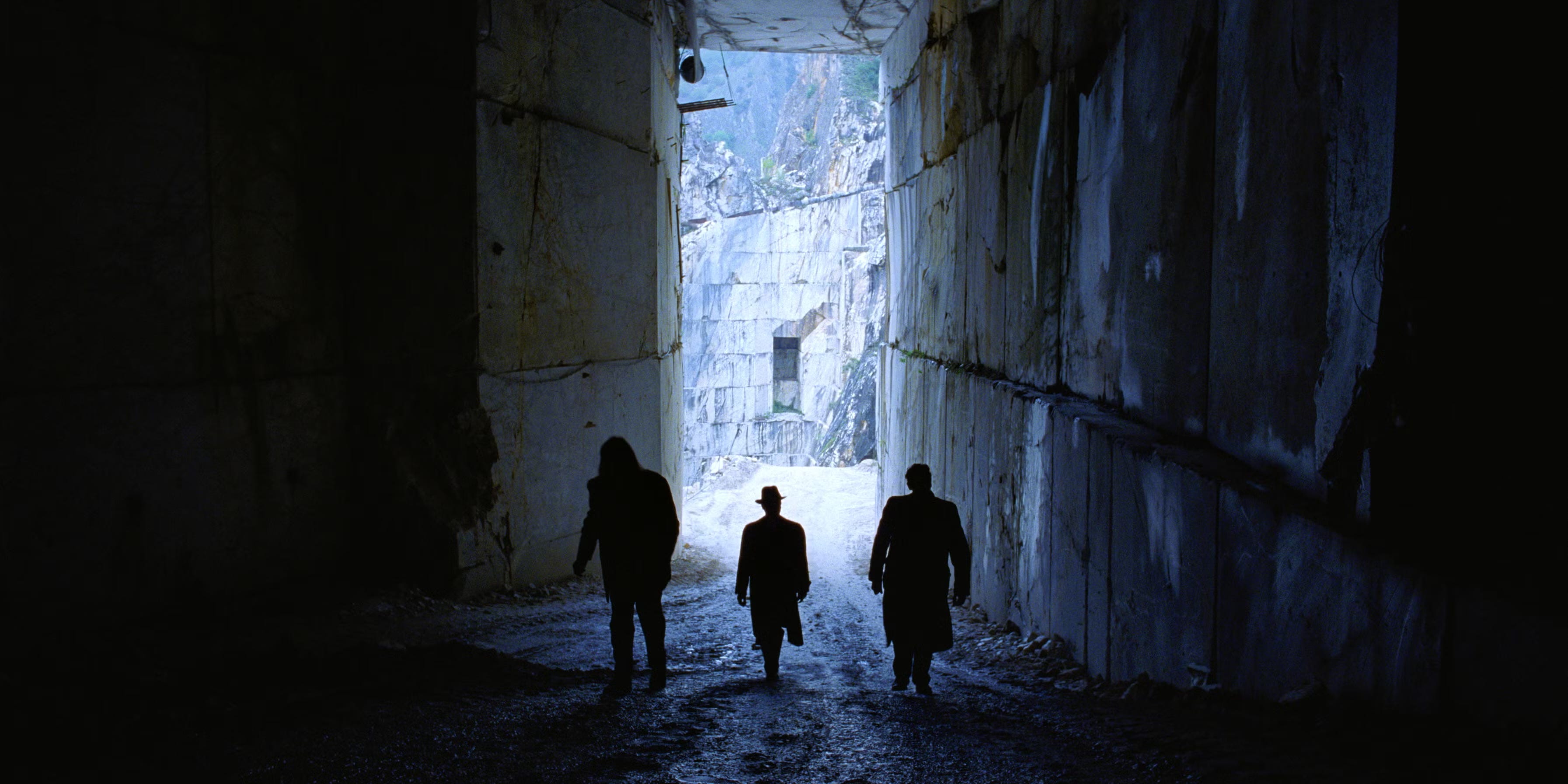
Corbet approaches filmmaking as an exploration, both thematically and in terms of form. His partner and co-writer, Mona Fastvold, goes so far as to describe films as “the closest we get to dreams... We speak in images and try to create as much meaning, symbolism, and subtext within those images as we can.”
They’re after “the big fish”, in Lynch’s parlance.
Corbet dares to dive down deep, where “the fish are more powerful and more pure… They’re huge and abstract… And they’re very beautiful.”
The Brutalist’s power, purity, scope, formal experimentation, and beauty make a strong case for it to win Best Picture, in my book!
In a risk-averse industry - with data driving paint-by-number movies more often than not - we need more films and filmmakers plumbing the depths. They should be recognized and rewarded, so that we get big swings more consistently.
“The algorithm and the data that many companies now rely on to decide what they do and do not greenlight is an inherently flawed, bullshit metric,” Corbet claims. “How on earth would we get the work of David Lynch, Sofia Coppola, or Wes Anderson, or any of these very commercially successful auteurs? We wouldn’t, because the fucking algorithm would never, ever support a Mulholland Drive.” He concludes:
What I’m hoping the film industry gleans from this year… is that whether you like or dislike the movies in the conversation this year, they’re pretty radical, independent films made by auteur filmmakers. Everyone should take a signal from that.
I pray that they do.

And if they don’t, well…
Then the next time you’re feeling down about it, pull up this photo of my sister’s Cats!

I’m sorry, I’m sorry. 😻
It’s just that I’m pretty sure every edition of The Ultimate Boon (this extra “behind the scenes” newsletter for paid subscribers) will feature some form of Cat spam. They bring me such joy in life, and I hope they can make you smile, too.
Have you seen The Brutalist? What did you think? Can art and commerce ever coexist peacefully? Let’s put our heads together and be a part of brainstorming more sustainable solutions for the arts. There has to be a better way.
Until next time, and I hope to catch you at our upcoming Movie Club event!



Corbert isn't the only one going after big fish, Mr. Koehler!
Oh! I also meant to say that I can't wait to see this movie, and I'm really really jealous that you got to see it on the big screen. It almost feels like there's no point in seeing it until I can see it on a screen like that! I absolutely love that the filmmaker was so audacious in his vision that he did all of this on such a low budget, in spite of the fact that I'm sure everyone was saying it was an insane thing to do. Talk about hope being a thing with feathers!